

When Richard Amaechi, 27, lost his job as a financial planner in North Carolina, he decided to pull up stakes and return to San Francisco, where his parents still lived. The question was: Had his hometown become too expensive to welcome him back?
The City by the Bay has been stretching budgets for years with a cost of living that routinely ranks among the highest in the nation. San Francisco apartments typically rent for almost twice what they do in Charlotte. Homes sell for three times the price.
“I was just so discouraged,” says Amaechi, a CFP® who had to move back with his parents when he returned in 2023. “It’s a tough adjustment moving back to mom and dad, trying to tell you to wash dishes.”
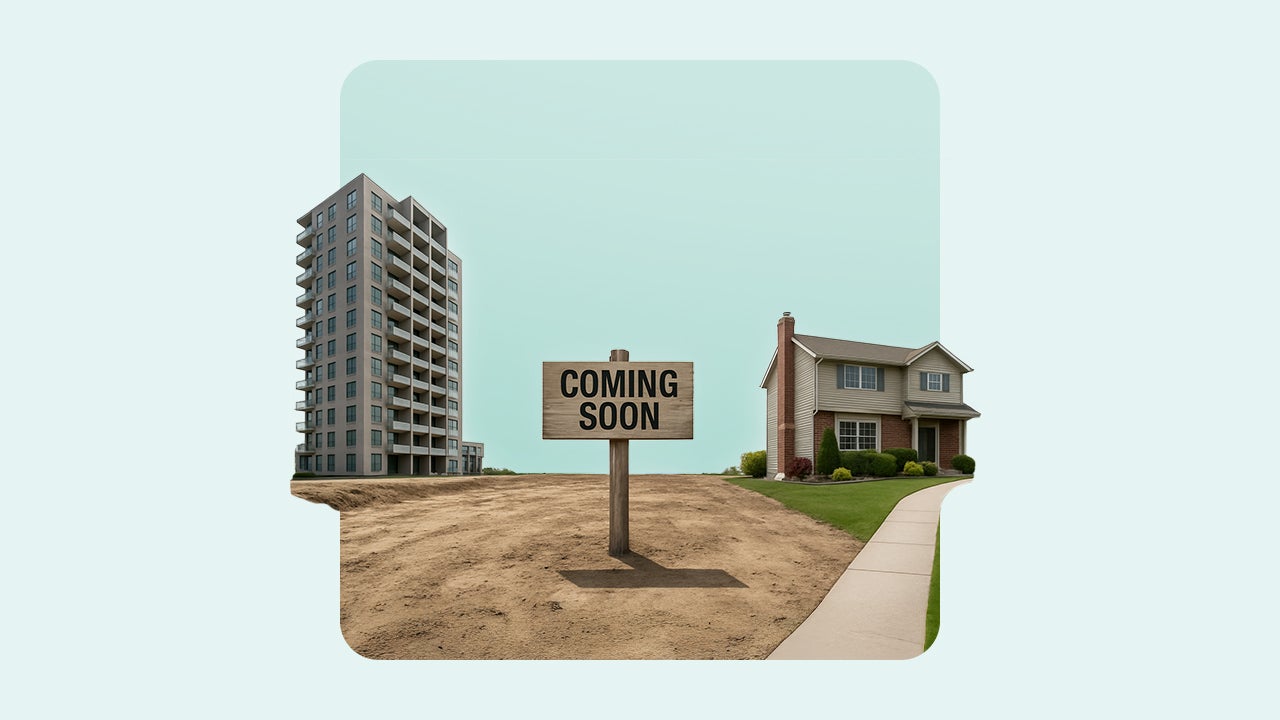
San Francisco is among many U.S. cities that have become especially tough on those who want to stay. Decades of restrictive zoning, rising construction costs and community resistance to multifamily housing have created what housing experts call the “missing middle,” a term used to describe a lack of affordable options for average-income residents that are the lifeblood of a city.
“If the only people that can live in the city are rich people, that doesn’t make the city diverse and vibrant and artistic,” says Alexander Sturke, director of communications for the Mayor’s Office of Housing in Boston.
In response, state and local governments are rethinking how and where Americans can live by changing the laws to push denser, more affordable housing and assisting low-to-medium-income buyers with financing.
“I think the danger is really that widening gap between people who can access a home and homeownership and people who can’t in our city,” says Laia Mitchell, a director at the City and County of Denver’s housing department. “If we’re not really pushing for affordable homeownership, we’re losing our community.”
Cities have had a problem building affordable homes for decades
The problem of dwindling affordable home inventory isn’t new. Since World War II, zoning codes in many metros have favored single-family homes outside of downtown areas. Increasingly restrictive building regulations made it tougher to build duplexes, triplexes and small multifamily buildings that can serve as a gateway to homeownership in the city, while rising construction costs made it more profitable to build larger homes in the suburbs.
When mortgage rates hit historic lows following the COVID-19 lockdowns, home prices surged due to increased demand. The result has been a nationwide housing shortage: a 2025 study by Zillow determined the country has a deficit of 4.7 million units.
The shortage has helped drive up home prices across the country. A Bankrate analysis of housing data has found, in fact, that a homebuyer earning the median U.S. income will find themselves priced out of three out of every four U.S. homes on the market. Buying a home often requires buyers to devote a larger chunk of their monthly budget than the real estate industry has traditionally recommended.
Undoing years of neglect will take time, but housing advocates say that many communities are now taking the problem seriously.
“Without homes, there are no jobs and no growth,” says Amy Tomasso, a director at Ivory Innovations, a housing affordability non-profit based in Utah. “It becomes a serious economic problem. You end up with communities of affluence and communities of affordability, huge gaps and long commutes for workers.”
Scalpel and hammer: How different approaches are playing out in Seattle and Massachusetts
Each city requires different approaches to how to solve the housing problem. In Seattle, residents, builders and the city council are trying to build new, affordable homes while retaining the city’s unique character. On the opposite side of the country, Massachusetts has passed legislation that imposes more mixed housing development on communities.
Here’s how these situations are playing out.
“There’s not one single product that fits all, but the ideas can be applied broadly. You figure out what will fit.” — Amy Tomasso, a director at Ivory Innovations, a housing affordability non-profit based in Utah
Unique challenges require flexible solutions in Seattle
In a city known for its tree canopy, some citizens and developers have been clashing for years over whether mature trees should be removed to make way for new homes. This has led to regulation over what trees can and can’t be cut down to enable development, and how many trees should be planted per tree removed.
The regulation saved a number of older, high-value trees — developers are now required to work around trees and plant new ones — though it has also effectively pushed up construction costs, which typically get passed on to the homebuyer.
In the latest attempt to address this issue, the Seattle City Council passed the Roots to Roofs pilot program in September 2025. This program creates 35 projects where community-based organizations can partner with developers — and, by softening the rules around tall, densely-packed properties, incentivize them to build more units in the same space, generating more income.
The projects also have protections for larger trees. While it’s just a start, it’s an example of how flexibility around building code can help build more homes and preserve what’s important to the community.
Seattle is among cities trying to make homebuying more affordable, albeit with limited funds. Nora Raybern, the communications manager for its Office of Housing, says the city’s so-called Housing Levy has a $970 million budget through 2030 to support housing affordability, including $51 million for homeownership.
Widespread legislation in Massachusetts
In Massachusetts, the state has pushed legislation to increase the housing supply. The Massachusetts Bay Transit Authority (MBTA) Communities Act, signed into law in 2021, requires that the 177 municipalities served by the MBTA to have at least one zoning district for multifamily housing (defined as three or more housing units on one lot). This has received a mixed response.
Some communities have resisted the law, while others like Cambridge and Somerville have embraced the opportunity to develop new housing. Tomasso says. Cambridge encouraged more building by eliminating a rule about space for resident parking and upped the allowed height of structures. Tomasso adds: “They’ve really pushed the envelope nationwide on zoning reform.”
Insight
In Boston, homebuyers earning the median household income should target a home that costs no more than $349,000 to avoid overstretching their finances, according to a Bankrate analysis of housing data. Only 4.8% of homes for sale are at or below that level.
The effectiveness of this law in smaller communities syncs up with what is happening in Boston.
“The reality is, we need all the communities around Boston to also be building more housing,” Sturke says. According to Sturke, more housing around public transportation helps people in these communities move between cities and towns. That’s good for the communities and for Boston, which has notoriously bad traffic.
Cities hope local down payment assistance helps when federal government-backed loans don’t
Outside of local housing initiatives, residents in other communities have other options to turn to when they find themselves in the “missing middle.”
Down payment assistance (DPA) programs, for example, can help prospective homebuyers afford to live in higher-priced places. Available nationally from cities, counties and states, DPA hit an all-time high in the third quarter of 2025, according to Down Payment Resource. But that doesn’t necessarily mean this will always help you get an accepted offer within major city limits.
“All my first-time homebuyers, I try to get them into a program, and it’s definitely beneficial on their part,” says Peter Duncan, a real estate agent in Seattle. However, “as long as they have that pre-approval letter… that’s the only thing that the sellers really care about, as long as they make sure that they are qualified to buy the home and it won’t be a waste of their time.”
Insight
About 8 in 10 would-be homeowners say down payment and closing costs are either a very or somewhat significant challenge to homeownership, according to Bankrate’s 2025 Home Affordability Report.
Examples of DPA, homebuyer assistance programs in some of the costliest cities
| Seattle | San Francisco | Boston | Denver | |
| Serves residents with area median incomes up to… | 80% | 50% to 200% (varies by program) | 135% | 150% |
| Minimum budget | $7.3 million annually (via its Housing Levy, between 2023 and 2030) | $3 million annually (via its House Trust Fund), plus funds via borrower repayment, voter-approved bond measures | $6 million annually, plus funding it apples for | Info not available |
Tip: Search your city or county’s website or contact its housing department to learn about down payment programs specific to your community
Data: Government-backed loans rarely help homebuyers in major cities
Government-backed loans — such as FHA and VA loans — can also help aspiring city dwellers, even if they have lower down payments or credit scores. Still, in major cities, where competition can be stiff, other buyers with higher levels of savings and credit are often better-positioned to win a sometimes inevitable bidding war.
Percent of 2024 mortgage originations for a home purchase that were…
| Metro Area | Conventional | FHA* | VA* |
| Seattle | 92 | 5 | 3 |
| San Francisco | 98 | 1 | 1 |
| New York | 90 | 8 | 1 |
| Miami, Fla. | 79 | 19 | 2 |
| Denver | 77 | 17 | 7 |
| Louisville, Ky. | 72 | 20 | 8 |
“Sellers in Southern Arizona often lean toward conventional offers because those deals are perceived as more straightforward,” says Mishka Cates, an agent in Tucson. “FHA, VA and down-payment-assistance loans can involve extra steps, like stricter appraisal standards or additional lender documentation, which can make sellers nervous about possible delays.”
Even six-figure down payment assistance, which is possible when you combine DPA programs, might not be enough for a disadvantaged buyer to win out — especially when up against a partial- or full-cash buyer. Nearly a third (32.6% of home purchases) are in pure cash, according to a February analysis by Redfin.
As longtime housing counselor Todd Christensen says, “Of course, cash offers are going to be king with any [seller].”
Percent of 2024 home purchases that were cash-only transactions…
| Metro | Percent |
| Seattle | 21 |
| San Francisco | 27 |
| New York | 33 |
| Miami, Fla. | 38 |
| Denver | 27 |
A happy ending in a high-cost city
After a year with his parents in San Francisco, Amaechi finally bought a place of his own. His city’s support programs proved to be a major help.
Amaechi discovered the Dream Keeper-Downpayment Assistance Loan Program (DK-DALP), one of 15 initiatives offered by the San Francisco Mayor’s Office of Housing and Community Development. In November 2024, Amaechi used DK-DALP — a “shadow loan” that doesn’t require payments — to finance half of the $750,000, two-bed-two-bath condo he now owns in the Bayview neighborhood. He financed the other half with a conventional loan, thanks to his strong credit.
For his part, Amaechi recognizes his good fortune of being on the other end of these efforts, even at an ongoing price.
“Even for me, owning a condominium… every month I’m paying that $700 HOA” fee, Amaechi says. “You know, in some states that’s rent.”
Why we ask for feedback
Your feedback helps us improve our content and services. It takes less than a minute to
complete.
Your responses are anonymous and will only be used for improving our website.
Help us improve our content
Read the full article here